

How to Know When to End a Relationship
(And When It's Worth Fighting For)
Sometimes the question becomes difficult to ignore: Should I stay, or should I leave? You may still love your partner and feel deeply unhappy. Knowing when to end a relationship is rarely about one decisive sign. It means looking honestly at what is happening between you and whether meaningful change is genuinely possible.
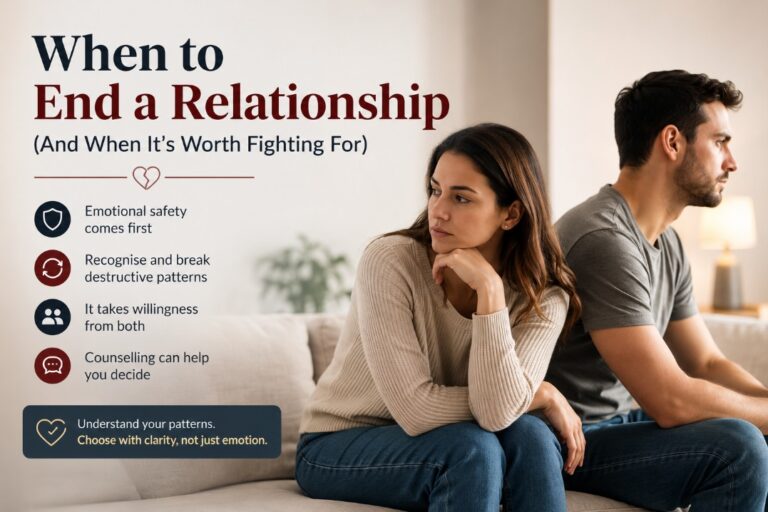
Being Unhappy Doesn’t Always Mean the Relationship Is Over
Every long-term relationship goes through disconnection. Work, parenting, financial pressure and life changes can affect how two people relate. An unhappy relationship is not automatically a failed one. What matters is what happens when it is acknowledged. Can you talk about what is wrong and hear each other without immediately dismissing or blaming?
Relational Life Therapy (RLT), developed by Terry Real, encourages people to look beyond what their partner is doing wrong and recognise their own contribution. This can be uncomfortable, but it can create real change.
Signs a Relationship May Be in Serious Trouble
People searching for signs a relationship is over often want certainty. Some patterns deserve attention.
You No Longer Feel Emotionally Safe
Emotional safety does not mean never disagreeing. It means being able to express vulnerability, disappointment or a different opinion without routinely expecting humiliation, intimidation or retaliation. Physical violence, coercive control, threats and abuse are different from ordinary relationship conflict. Safety must come first.
The Same Conflict Keeps Repeating
Many couples repeat a few core patterns. One criticises while the other withdraws. One seeks reassurance while the other creates distance. Attachment theory can help explain why rejection and vulnerability trigger powerful reactions. Understanding a reaction does not excuse harmful behaviour, but can reveal what needs to change.
Only One Person Is Trying
A relationship does not require two perfectly self-aware people, but it requires willingness from both. One person cannot create mutual accountability, intimacy and respect for two people.
Should I Leave My Relationship?
If you repeatedly ask, “Should I leave my relationship?”, try another question: “What would need to change for me to genuinely want to stay?” Are those changes realistic, clearly communicated and supported by action rather than promises?
When a Relationship May Be Worth Fighting For
Relationships can survive conflict and significant hurt when both people are willing to examine the pattern and take responsibility. Progress means recognising destructive patterns earlier and responding differently.
A trauma-informed perspective recognises that some adult behaviours may once have been protective. Someone who learned that vulnerability led to rejection may become fiercely independent. Understanding these patterns is not about blame. It gives you more choice about what happens next.
If fear, defensiveness or uncertainty has become part of everyday communication, understanding emotional safety in relationships can help you consider whether the relationship has the foundations needed for honest repair.
When Relationship Counselling Can Help
You do not have to wait until the relationship is almost over before seeking relationship counselling. If you are asking “should I leave my relationship?” or looking for signs a relationship is over, counselling can help you explore whether repair is possible.
Frequently Asked Questions
How do I know when to end a relationship?
There is no single sign for every couple. Persistent disrespect, lack of safety, repeated betrayal, destructive patterns and an ongoing refusal to participate in change are important factors to consider.
Does being unhappy mean I should leave?
Not necessarily. Consider how long the unhappiness has continued, what is driving it and whether both partners are willing to work differently.
Can relationship counselling help me decide?
Yes. Counselling can provide space to understand the relationship more clearly, explore whether meaningful repair is possible and consider your choices without forcing a particular outcome.
Can a relationship recover after years of conflict?
Some relationships can change after long periods of conflict when both people recognise their contribution to the pattern and consistently practise different ways of relating.
You Don’t Have to Figure This Out Alone
Recognising your own contribution to relationship conflict isn’t about blame—it is about creating the possibility for change.
If you are ready to understand your relationship patterns and create meaningful change, you can Book a relationship counselling session or Book a free 15-minute Discovery Call.
Not sure where to begin? Take the Relationship Quiz to gain insight into your current relationship patterns and discover what may be getting in the way of connection.
Healthy relationships are not built by perfect people. They are built by people willing to look honestly at themselves, take responsibility for their part, and choose a different way forward.